 Skip to content
-
What is a CT clamp?
A CT (Current Transformer) clamp monitors how much electricity your home is using in real time.
It allows your EV charger to automatically adjust charging speed, preventing overload and keeping your installation safe.
How much does EV charger installation cost?
Most EV charger installations cost between:
- £750 – £1,500 for a standard installation
The final cost depends on:
- Cable length and routing
- Consumer unit suitability
- Additional upgrades (like SPD or board upgrades)
👉 We provide fixed, transparent quotes before any work begins, as described in the EV Charger Installation FAQ.
7kW vs 22kW EV chargers – which is best?
- 7kW EV Charger
- Ideal for most UK homes
- Adds around 25–30 miles per hour
- Works on single-phase supply
- 22kW EV Charger
- Faster charging speeds
- Requires three-phase power
- Typically used in commercial properties
👉 For most homes in Berkshire and Surrey, a 7kW charger is the best option.
Tethered vs untethered EV chargers
- Tethered chargers
- Built-in cable
- Quick and convenient
- Untethered chargers
- No cable attached
- Cleaner look and more flexibility
How long does EV charger installation take?
- Standard installation: 2–4 hours
- More complex installs: Up to a full day
We aim to complete all work efficiently with minimal disruption.
Does the power need to be turned off?
Yes, but only briefly.
Your electricity will usually be off for 30–60 minutes while we safely connect your EV charger.
Why do I need a Surge Protection Device (SPD)?
An SPD protects your home and EV charger from voltage spikes caused by:
- Lightning strikes
- Grid fluctuations
- Electrical faults
Current UK regulations mean SPDs are now recommended in most installations.
Can I use my existing consumer unit?
In many cases, yes—if:
- There is spare capacity
- It meets current regulations
- It has the correct protection
If not, we may recommend:
- A consumer unit upgrade
- Or a dedicated EV circuit
What is a standard EV charger installation?
A standard installation typically includes:
- Charger installed on an external wall
- Up to 10 metres of cable
- Direct connection to your consumer unit
- Simple cable routing
What is a non-standard EV charger installation?
Non-standard installations may include:
- Long cable runs
- Groundworks or trenching
- Complex cable routing
- Consumer unit upgrades
These are quoted individually following a site survey.
What is EV Ultra cable?
EV Ultra cable is a specialist cable used in EV installations.
It combines:
- Power supply
- Data cable for CT clamp
👉 This allows for a cleaner, quicker and more efficient installation.
Are EV chargers compatible with Octopus Energy tariffs?
Yes—most modern EV chargers work with smart tariffs such as:
- Octopus Intelligent Go
- Other off-peak EV tariffs
This allows your charger to automatically charge when electricity is cheapest.
What is randomised delay?
Randomised delay is a built-in feature that slightly staggers charging start times.
This helps:
- Reduce strain on the electricity grid
- Prevent demand spikes
Do I need an EV tariff to install a charger?
No—you do not need a special tariff to install an EV charger.
However, switching to an EV tariff can significantly reduce your charging costs.
Get a free EV charger installation quote
Looking for EV charger installation in Berkshire, Surrey or surrounding areas?
Berks & Sparks provide:
- Fully qualified installations
- Honest, fixed pricing
- Fast turnaround times
👉 Contact us today for a free, no-obligation quote
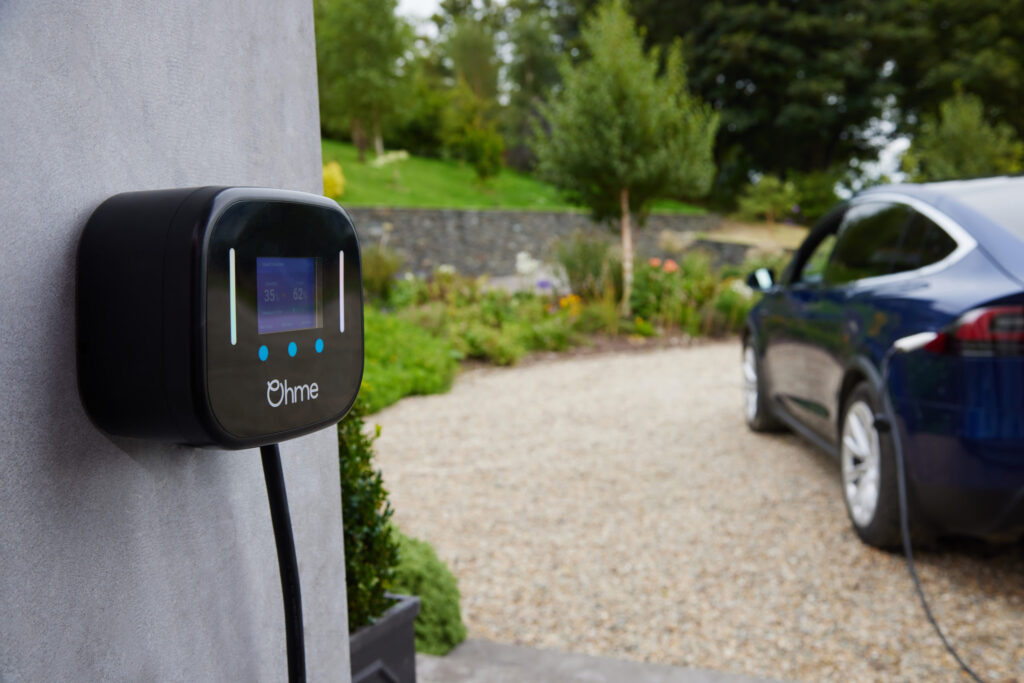

EV Charger Installation FAQ – Berks & Sparks
Seeking clear answers in our EV Charger Installation FAQ? At Berks & Sparks, we install EV chargers across Berkshire, Surrey and surrounding areas. Below are the most common questions we get from homeowners.
